How to Encourage Your Child to Learn With Wonder

Did you know that a dogwood blossom’s white petals are actually bracts — specialized leaves that hold tiny flowers in their center?
I learned this last week from my son, who explained the parts of a flower to me in breathless excitement. He had dissected a dogwood blossom during his third-grade science class, and he was completely fascinated. (As was I.)
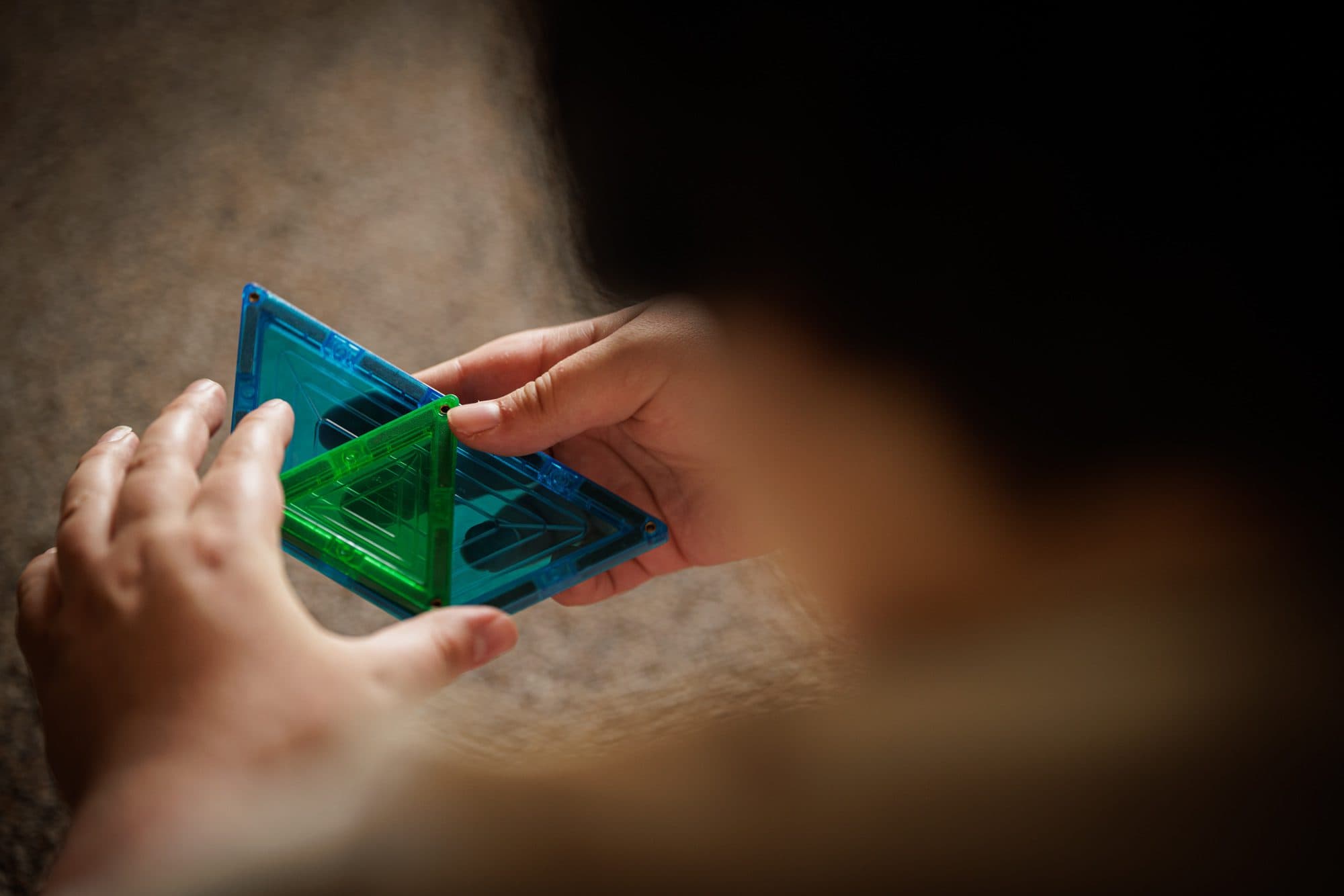
This simple interaction between father and son reminded me: when children are excited to learn new things, their minds and lives open to a world of possibilities. It is our job, as parents and educators, to keep these possibilities flowing — to help children associate learning with a feeling of wonder and excitement.
Here at The Quaker School at Horsham, we do this by approaching education through the lense of our educational philosophy (we call it “Learning with Wonder: A Childhood Manifesto”). But regardless of what or how your child learns in the classroom, you can help cultivate this sense of wonder at the world — from your own home.
Here are some ways to encourage your child to learn with wonder every day:
#1: Let your child ask.
Children love to ask questions. They’re curious about the world around us. They’re skeptical of how things work. They have an innate drive to find answers and truths and new meaning. It’s up to us to keep children asking questions by encouraging their free lines of thought, and by helping them find the answers that will spark more questions.
#2: Let your child explore.
Instead of keeping our children held safely to our chests, we need to give them the room and the permission to safely explore the world around us. Children need time to play, to rest, to discover nature, to make friends. Allow your child to discover new things, and to lead the way by following his or her own interests.
#3: Let your child get messy.
As we say in our manifesto, learning is at its best when it is messy, loud, active, fun and intense. The spirit and passion of learning is more important than the facts and figures we memorize. While mess can sometimes be uncomfortable, it is a unique, experiential learning tool that is critical to our ability to innovate and expand our world views. So let your child get a little messy, and he or she will understand that learning — and growing — is rarely neat and tidy.
While my son will probably forget the difference between a pistil and pedicel in the years to come, I hope he never forgets the fun of foraging in the woods behind his school to find the perfect specimen … the excitement of discovering the unknown when peeling back the leaves … the satisfaction of putting names to parts he has seen before but could not identify … the moment in education when one answered question gives birth to so many more unanswered ones.
Children and adolescents — and truly all of us — have an amazing, innate, human capacity for learning. It is a privilege to help children grow their curiosity and question the world around us — and give them the tools they need to find the answers.
To learn more about our Childhood Manifesto, read it here — and let us know: What do you do to help your child “learn with wonder?” Share your thoughts in the comments below, or join the conversation on Facebook.